 License: 1143915
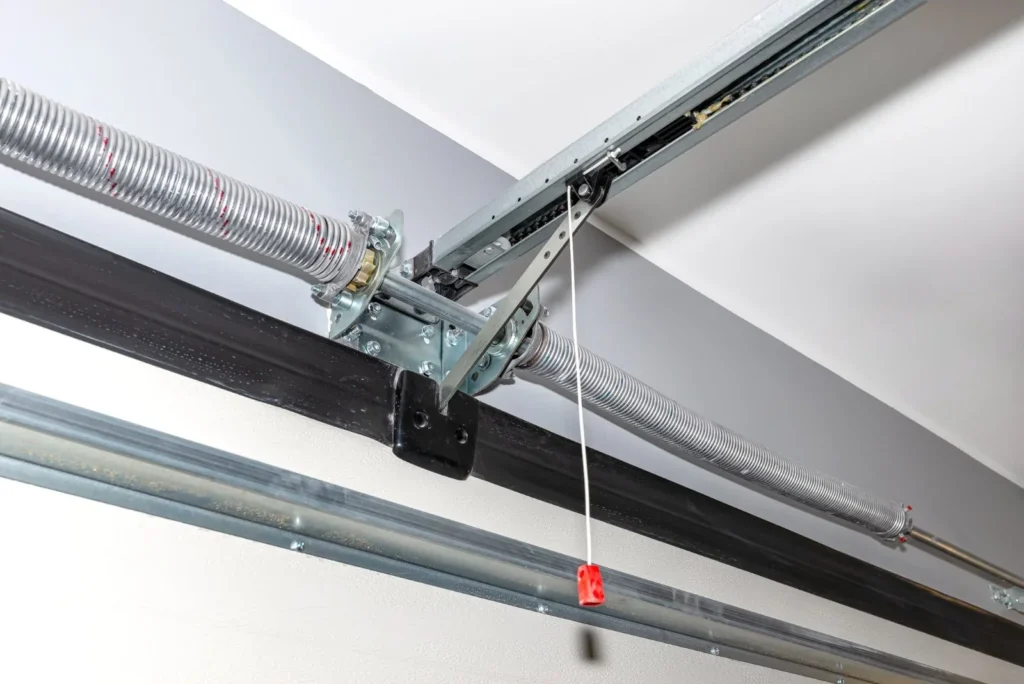
Most residential garage doors run on one of two spring systems: torsion springs, mounted on a metal shaft above the door opening, or extension springs, stretched along the horizontal tracks on each side of the door. Torsion springs are the more common and longer-lasting choice on modern Bay Area homes, while extension springs are usually found on older doors and lighter single-car setups. The quickest way to tell which you have is to look above the closed door: a spring wrapped around a horizontal shaft means torsion, and two long springs running parallel to the ceiling tracks means extension. Both types are under extreme tension and should only be replaced by a trained technician. If you are not sure which system you have, or you just heard a loud bang from the garage, call One Stop Garage Doors & Gates at (650) 910-6090 and we will identify it for you.
Knowing your spring type matters because it affects safety, replacement cost, and how long the parts last. Here is a plain-English breakdown of both systems, how to tell which one you have, and what to expect at replacement time in the South Bay.
What Torsion Springs Are and How They Work
Torsion springs sit on a steel shaft above the garage door opening, usually centered over the header. When the door closes, cables wind the springs tight and they store energy by twisting. When you open the door, that stored torque unwinds and does the heavy lifting, so the opener or your arm does not have to.
Because the force is balanced across the shaft, torsion systems move smoothly and hold up well on heavier doors, including the insulated steel and wood-look doors popular on newer homes in Cupertino and Los Gatos. Most double-car doors built in the last 20 years use torsion springs.
What Extension Springs Are and How They Work
Extension springs run along the horizontal tracks above each side of the door, roughly parallel to the ceiling. Instead of twisting, they stretch and contract. As the door lowers, the springs extend and store energy; as the door rises, they pull back and help lift the weight.
Extension springs are common on older single-car doors and lighter setups you still see across established Santa Clara and Sunnyvale neighborhoods. They cost a little less up front but have more exposed moving parts. A properly installed extension system should always include safety cables through the center of each spring, so a snapped piece cannot fly across the garage.
How to Tell Which Springs You Have
You do not need any tools to identify your spring type. With the door fully closed, stand inside the garage and look up. Use this quick checklist:
- One or two springs wound around a metal shaft directly above the door opening means you have torsion springs.
- A pair of long, skinny springs stretched along the tracks on the left and right, above each door track, means you have extension springs.
- A visible gap or a spring separated into two pieces means the spring is broken and the door should not be operated.
- Extension setups usually have a pulley and a lift cable at each side; torsion setups have cable drums mounted at the ends of the shaft.
- If both sides look different or you cannot tell, take a photo and call (650) 910-6090 and we will confirm it for you.
One safety note: never poke, pull, or wedge anything into a spring to test it. Both types stay under tension even when the door is closed.
Torsion vs Extension: Side-by-Side Comparison
Here is how the two systems compare on the points that matter most to Bay Area homeowners.
| Feature | Torsion Springs | Extension Springs |
|---|---|---|
| Location | On a shaft above the door opening | Along the tracks on each side of the door |
| How it works | Twists to store energy | Stretches to store energy |
| Typical lifespan | ~10,000 cycles / 7 to 12 years | ~10,000 cycles / 7 to 12 years, often shorter with heavy use |
| Balance and smoothness | Smoother, better balanced, quieter | Adequate on lighter doors, can be jerkier |
| Safety | Contained on the shaft; fewer flying parts | Needs safety cables to contain a broken spring |
| Best suited for | Heavier, double-car, and insulated doors | Lighter, older, single-car doors |
| Typical replacement cost range | Higher of the two ranges | Lower of the two ranges |
Spring Lifespan and High-Cycle Options
Garage door springs are rated in cycles, and one cycle is a single open plus close. A standard spring is rated for roughly 10,000 cycles, which works out to about 7 to 12 years for an average household. If your family opens the door six or eight times a day, you will reach that limit sooner.
To stretch the interval between replacements, ask about high-cycle springs. Rated for 20,000 cycles or more, they are a smart upgrade for households that use the garage as their main entrance and can double the service life. On a two-spring torsion door, we usually replace both springs at once, since the second is likely near the end of its life too.
Why DIY Spring Replacement Is Dangerous
This is the part we never soften. A garage door spring stores hundreds of pounds of force, and that energy does not go away when the door is closed. Winding or unwinding a torsion spring with the wrong tools, or unhooking an extension spring that is still loaded, can cause the spring or a winding bar to whip loose at high speed. Serious hand, face, and eye injuries happen every year to homeowners who tried to save a service fee.
Spring work also has to be balanced. The wrong wire size, length, or wind direction can make the door slam shut, damage the opener, or fail again within weeks. This is genuinely a job for a pro with the right winding bars, cones, and cable-drum tools. If your spring has already broken, do not run the door with the opener, since that can bend the tracks or burn out the motor. For fast help, our team handles garage door repair in San Jose and the surrounding cities 24/7.
Typical Replacement Cost Ranges in the South Bay
Every door is different, so we quote by the actual spring size, door weight, and whether you want standard or high-cycle parts. As a general guide, these are typical 2026 South Bay ranges for a professional, parts-and-labor spring replacement:
- Single extension spring replacement: on the lower end of the range.
- Single torsion spring replacement: mid range.
- Pair of torsion springs on a double-car door: the higher end of the range.
- High-cycle upgrade: add-on above the standard part cost.
Because pricing depends on the exact hardware, we do not post flat prices online. These are typical ranges only; call (650) 910-6090 for an exact quote after we see your door. To learn more about the process, see our garage door spring replacement in San Jose page. In most cases we carry common spring sizes on the truck and finish the job the same day.
For spring safety and cycle-rating standards, refer to the Door & Access Systems Manufacturers Association (DASMA).
Frequently Asked Questions
How do I know if I have torsion or extension springs?
Close the door and look up from inside the garage. If you see a spring wound around a metal shaft above the door opening, you have torsion springs. If you see two long springs stretched along the tracks on each side of the door, you have extension springs. If you cannot tell, take a photo and call (650) 910-6090.
Can I replace a garage door spring myself?
No. Garage door springs hold hundreds of pounds of tension even when the door is closed, and a mistake can cause a spring or winding bar to snap loose and injure you. Spring replacement should always be done by a trained technician with the correct tools. Call (650) 910-6090 and we will handle it safely.
How long do garage door springs last?
Most standard springs are rated for about 10,000 cycles, which is roughly 7 to 12 years for an average household. Homes that use the garage as the main entrance wear springs out faster. High-cycle springs rated for 20,000 cycles or more can last about twice as long.
How much does spring replacement cost in San Jose?
Cost depends on the spring size, door weight, and whether you choose standard or high-cycle parts. Extension springs sit at the lower end of the range and a pair of torsion springs at the higher end. These are typical 2026 South Bay ranges only; call (650) 910-6090 for an exact quote.
Is torsion or extension better for my garage door?
Torsion springs are generally better for heavier, double-car, and insulated doors because they run smoother, balance better, and contain fewer flying parts if one breaks. Extension springs are fine for lighter, older, single-car doors. If you are upgrading, most homeowners choose torsion.
What happens when a garage door spring breaks?
You will usually hear a loud bang, and the door will feel very heavy or refuse to open. Do not keep running the opener, since that can bend the tracks or burn out the motor. Leave the door down and call (650) 910-6090 for a same-day repair.
Get Your Springs Checked or Replaced Today
Whether you have torsion or extension springs, One Stop Garage Doors & Gates can identify your system, replace worn springs safely, and get your door running smoothly again. Call (650) 910-6090 or request service online for fast help across San Jose, Santa Clara, Sunnyvale, Cupertino, Campbell, Los Gatos, Milpitas, Mountain View, and the wider South Bay. We are family-owned, licensed (CSLB #1143915), bonded and insured, and available 24/7.
Need a Garage Door or Gate Fixed Today?
One Stop Garage Doors & Gates offers same-day service across San Jose, Santa Clara & the South Bay — licensed, upfront pricing, no surprise fees.
Call (650) 910-6090Schedule Online