 License: 1143915
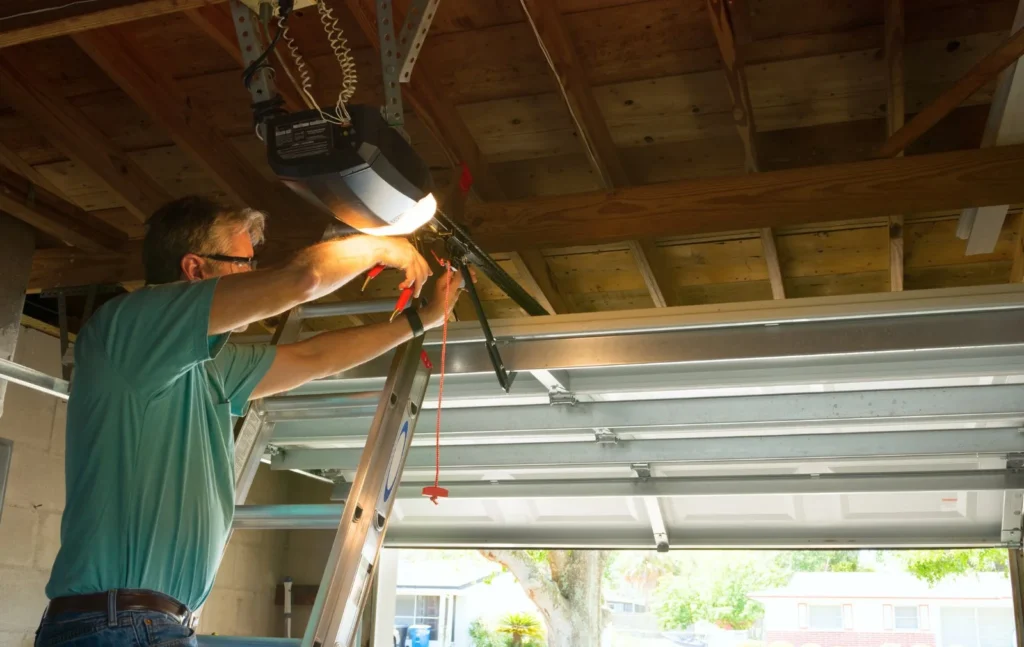
Garage Door Opener Not Working? Troubleshooting & Reset Guide
Every common cause in order, how to reset the opener and reprogram your remote, and when the motor or board has truly failed.
Quick Answer
When a garage door opener is not working, check the simple things first: power (plug, GFCI, breaker), remote batteries, the safety sensors, and whether the manual-release cord was pulled (the motor runs but the door does not move). If those are fine, power-cycle the opener for 30 seconds to reset it, then reprogram the remote. A humming motor with no movement usually means a stripped drive gear or a failed board.
When your garage door opener is not working, it is usually one of a handful of simple issues — dead batteries, blocked sensors, a disconnected trolley, or a setting that drifted — and most take only a few minutes to fix. This guide walks through every common cause in order, shows you how to reset the opener and reprogram your remote, and explains when the motor or logic board has genuinely failed and it is time for a repair or replacement.
Is It the Opener or the Door?
Before you troubleshoot, figure out which part is failing. If the motor runs, lights work, and remotes respond but the door is heavy, crooked, or stuck, the problem is usually the door, springs, or cables — not the opener. If the motor is silent or unresponsive, or the door reverses on its own, the opener itself is the likely culprit. The checks below focus on the opener.
1. Check the Power First
It sounds obvious, but a surprising number of dead openers are simply unplugged, on a tripped GFCI outlet, or on a flipped breaker. Confirm the opener is plugged in, press the reset button on the outlet, and check the breaker panel. If the wall button and the opener light are both dead, power is the first thing to rule out.
2. Dead Remote or Keypad Batteries
If the wall button works but the remote or keypad does not, the remote battery is the likely culprit. Replace it with a fresh one — remotes use common coin-cell or AAA batteries. A keypad that has gone unresponsive usually just needs a new 9-volt battery behind the cover.
3. Blocked or Misaligned Safety Sensors
The two photo-eye sensors near the floor stop the door from closing on an obstruction. If they are blocked or knocked out of alignment, the opener will not close the door and the opener light often blinks to warn you. Clean the lenses, clear the beam path, and aim the two eyes at each other until their indicator lights glow steady.
4. The Door Is Disconnected from the Opener
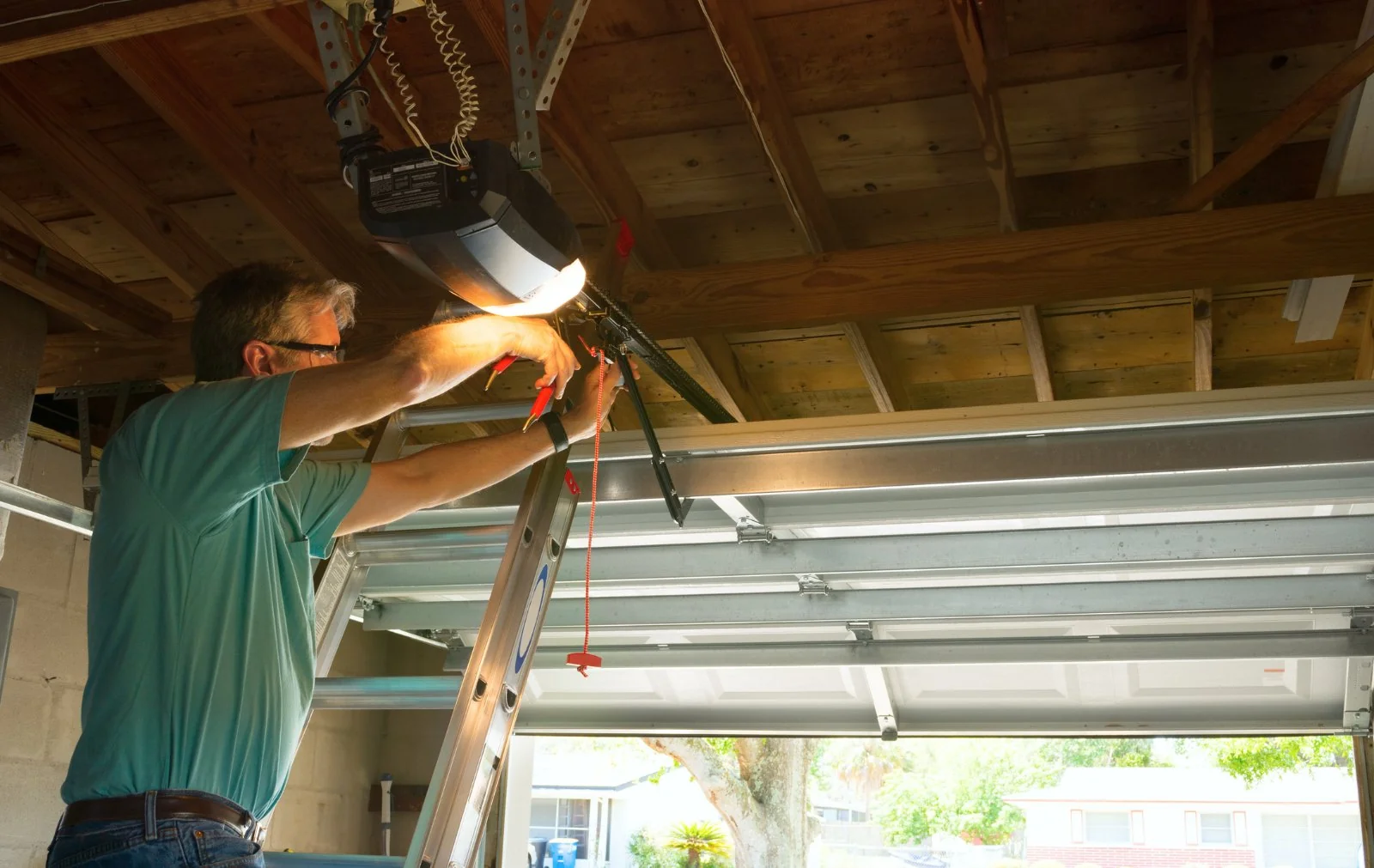
Every opener has a manual-release cord — the red rope with a handle — that disconnects the door from the trolley so you can open it by hand during a power outage. If that cord was pulled, the motor runs but the door does not move because the trolley is disengaged. Re-engage it by pulling the cord toward the door (or the door frame) until the trolley clicks back onto the rail, then run the opener to relock it.
5. Travel and Force Settings Are Off
Openers have travel-limit and force settings that tell the motor how far to move the door and how much resistance to allow. After a power surge or over years of use these can drift, causing the door to stop short, reverse, or not close. The adjustment screws or buttons are on the motor unit; small changes, tested between each, usually restore normal travel.
6. Worn Drive Gear or Motor
If the motor hums or runs but the door does not move — and the trolley is engaged — the plastic drive gear inside a chain or belt opener may be stripped, a common failure on openers around ten years old. A grinding noise with no movement points the same way. The gear can sometimes be replaced, but on an old opener a full replacement is often the better value.
7. Logic Board or Capacitor Failure
If the opener has power but is completely unresponsive to both the wall button and a fresh remote, the logic board or the motor’s starting capacitor may have failed — often after a power surge or lightning. This is an internal repair best diagnosed by a technician, who can tell you whether a board swap or a new opener makes more sense.
How to Reset a Garage Door Opener
A reset clears glitches and is the fix for many opener quirks. There are two levels:
- Power-cycle reset. Unplug the opener for 30 seconds, then plug it back in. This reboots the logic board and clears many temporary faults — try this first.
- Factory reset. Press and hold the “Learn” button on the motor unit until the Learn LED goes out (about 6–10 seconds). This erases all paired remotes and keypads, so you will need to reprogram them afterward.
How to Reprogram Your Remote and Keypad
- Press the Learn button. Find it on the motor unit (often under a light cover) and press it once; the Learn LED lights up.
- Press the remote button. Within about 30 seconds, press the button on your remote. The opener light will blink or click to confirm it learned the remote.
- Program the keypad. Press Learn again, enter your chosen PIN on the keypad, and press Enter to pair it.
- Test everything. Cycle the door with the remote and the keypad to confirm both work.
LiftMaster, Chamberlain, and myQ Resets
LiftMaster and Chamberlain openers share the same Learn-button process above. For a myQ smart opener that has dropped offline, power-cycle the opener, confirm your Wi-Fi is working, and re-add the opener in the myQ app. If the myQ hub keeps disconnecting, moving your router closer or adding a Wi-Fi extender near the garage usually fixes it.
Why Is My Opener Beeping or Flashing?
Blinking lights and beeps are the opener telling you something. A steady blinking opener light that will not close the door almost always means the safety sensors are misaligned or blocked — realign them first. Beeping is common on battery-backup openers and usually signals a low or failed backup battery that needs replacing. Some smart openers beep and flash before an automatic timed closing. If the light flashes a specific number of times in a repeating pattern, that is a diagnostic code — check your opener’s manual for what that count means, as it points to the exact fault.
How Long Do Garage Door Openers Last?
A typical garage door opener lasts about 10 to 15 years. Openers used many times a day, or exposed to power surges and heat, wear faster. If your opener is in that age range and starting to fail, repeated repairs often cost more than they are worth — and a newer opener runs quieter and adds modern safety and security features.
Chain vs Belt vs Screw-Drive Openers
If you end up replacing the opener, knowing the drive types helps you choose:
- Chain drive: the most affordable and durable, but the loudest — fine for a detached garage.
- Belt drive: uses a reinforced rubber belt for near-silent operation, ideal when a bedroom sits above or beside the garage.
- Screw drive: fewer moving parts and strong lifting power, with moderate noise and low maintenance.
Belt-drive smart openers are the most popular replacement today because they are quiet and connect to your phone for remote control and alerts.
How to Maintain Your Garage Door Opener
Simple upkeep keeps an opener running for years. A few times a year, wipe and lightly lubricate the rail or chain, test the safety reverse by placing a roll of paper towels under the closing door (it should reverse on contact), check that the photo-eye sensors are clean and aligned, and replace remote and backup batteries before they die. Keeping the door itself balanced and lubricated matters just as much — a heavy, binding door is the fastest way to burn out an opener motor.
When to Repair vs Replace an Opener
Repair makes sense for sensors, remotes, gears, and boards on a newer opener. Replacement is usually the better value if the opener is more than ten to fifteen years old, lacks modern safety features, or has a failed motor — a new belt-drive or smart opener is quieter, more secure, and comes with a fresh warranty.
Can You Open a Garage Door Without an Opener?
Yes — every automatic door has a manual-release cord, the red rope with a handle that hangs from the trolley. During a power outage or opener failure, pull that cord to disconnect the door from the motor, then lift the door by hand. If the springs are healthy, a balanced door lifts easily and stays open. If it feels extremely heavy, stop — that is a broken-spring sign, not an opener problem. To reconnect afterward, pull the cord toward the door and run the opener until the trolley clicks back onto the rail.
How Much Does Garage Door Opener Repair Cost?
Most opener problems are inexpensive to fix. As a rough guide for the South Bay:
| Opener Service | Typical Cost |
|---|---|
| Sensor realignment or replacement | $75 – $175 |
| Remote / keypad programming or replacement | $50 – $150 |
| Drive gear replacement | $100 – $250 |
| Logic board or capacitor repair | $150 – $350 |
| New opener installed | $300 – $650 |
Simple fixes like sensors and remotes are quick and cheap; a failed motor or board on an old opener is where replacement usually becomes the smarter spend.
When to Call a Professional
Call a technician if the opener has a failed motor, gear, or logic board, if the door will not move after you have checked power, sensors, and the manual release, or if you would rather have it diagnosed and fixed right the first time. Our team repairs and installs all opener brands across the South Bay — opener repair in San Jose, Santa Clara, remote and keypad programming, and full garage door repair.
Opener Won’t Work? We’ll Fix or Replace It Today
One Stop Garage Doors & Gates repairs and installs every garage door opener brand across San Jose, Santa Clara, and the South Bay. Same-day service, upfront pricing.
Call 650-910-6090Why is my garage door opener not working?
The most common causes are lost power (unplugged, tripped GFCI, or breaker), dead remote batteries, blocked safety sensors, or a pulled manual-release cord that disconnected the door from the motor. Check those first.
How do I reset my garage door opener?
Unplug the opener for 30 seconds and plug it back in to reboot it. For a full factory reset, hold the Learn button on the motor until the LED goes out, which erases all remotes so you will need to reprogram them.
Why does my opener motor run but the door won’t move?
Either the manual-release cord was pulled and the trolley is disconnected, or the plastic drive gear is stripped. Re-engage the trolley first; if the motor still spins with no movement, the gear likely needs replacing.
How do I reprogram my garage door remote?
Press the Learn button on the motor unit, then press your remote button within about 30 seconds — the opener light blinks to confirm. Repeat to add a keypad PIN, then test both.
Why won’t my opener close the door?
Usually the photo-eye sensors are blocked or misaligned — the opener refuses to close and often blinks its light. Clean the lenses and realign the two sensors until their LEDs glow steady.
Should I repair or replace my garage door opener?
Repair sensors, remotes, gears, and boards on a newer opener. Replace an opener that is over ten to fifteen years old, has a failed motor, or lacks modern safety features — a new smart opener is quieter, safer, and warrantied.