 License: 1143915
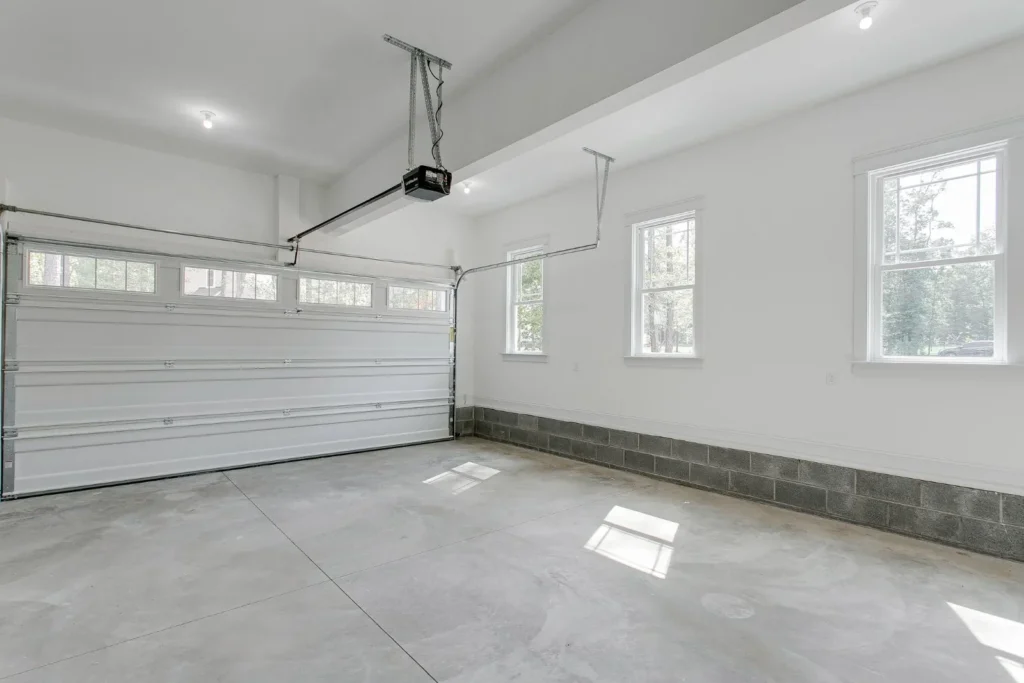
For most attached garages, garages with a finished room above, or a garage you use as an office, gym, or EV charging spot, an insulated garage door is worth it — and the real difference between insulated and non-insulated comes down to R-value, a measure of how well the door slows heat transfer. A non-insulated door is a single layer of steel, so it does little to hold temperature or block sound. An insulated door adds a foam core that keeps the space more comfortable, quiets the street, and resists dents. If your garage is detached and you only park in it, a non-insulated door is often all you need. For a straight answer about your exact garage, call One Stop Garage Doors & Gates at (650) 910-6090.
Below is a plain-English breakdown of what R-value means, how single-layer, 2-layer, and 3-layer doors compare, and when insulation actually pays off here in the South Bay and on the Peninsula, where days are mild but garages can still swing hot and cold.
What R-Value Actually Means
R-value measures a material’s resistance to heat flow. The higher the number, the better the door holds heat in during a cool morning and keeps it out on a warm afternoon. It is the single most useful spec when you compare garage doors, because it tells you how the door will perform, not just how it is built.
A bare single-layer steel door sits near R-0 to R-1, so it barely slows temperature at all. Add a foam core and the number climbs quickly. Just keep in mind that a door’s rated R-value is measured at the panel; real-world performance also depends on weather seals, the door frame, and how tight the installation is. That is why a proper install matters as much as the door you pick.
Single-Layer vs 2-Layer vs 3-Layer Construction
Garage doors generally come in three build types, and the layer count is the fastest way to understand what you are buying.
Single-layer (non-insulated): One panel of steel with no foam. It is the lightest and least expensive option, and it is fine for a detached garage or a pure storage space.
2-layer (polystyrene): A steel panel backed by rigid polystyrene foam board. This is the popular mid-range choice. It adds real insulation, cuts noise, and stiffens the door so it dents less, usually landing around R-6 to R-9.
3-layer (polyurethane): Foam is injected between an outer and inner steel skin, bonding the whole panel into one solid piece. Polyurethane insulates better per inch than polystyrene, so these doors reach roughly R-12 to R-18 or higher. They are the quietest, strongest, and most energy-efficient, and also the priciest.
Insulated vs Non-Insulated: Side-by-Side Comparison
Here is how the two approaches stack up across the factors that matter most. Prices reflect typical 2026 ranges for a standard two-car door, installed; call (650) 910-6090 for an exact quote.
| Factor | Non-Insulated (Single-Layer) | Insulated (2-Layer & 3-Layer) |
|---|---|---|
| R-value | Around R-0 to R-1 | R-6 to R-9 (polystyrene); R-12 to R-18+ (polyurethane) |
| Noise | Louder; rattles and echoes more | Quieter operation; muffles street and opener noise |
| Durability | Thinner panel, dents more easily | Stiffer panel, better dent and impact resistance |
| Energy & comfort | Little temperature control | Holds temperature better; more comfortable garage |
| Price range (installed) | Roughly $850–$1,600 | Roughly $1,300–$2,400 (2-layer); $1,900–$3,800+ (3-layer) |
These are typical 2026 ranges only, and the final number depends on door size, material, window options, and hardware. We give you the exact figure before any work starts.
When Insulation Is Worth It in the Bay Area
Our climate is mild most of the year, so people sometimes assume insulation does not matter here. In practice, several Bay Area situations make an insulated door the smarter buy. If any of these describe your home, insulation usually pays off in comfort, quiet, and durability.
- Attached garage: The garage shares a wall with your living space, so a warmer, more stable garage means less heat and cold creeping into the house.
- A room above or beside the garage: Bedrooms and bonus rooms over the garage stay more comfortable when the door below holds temperature.
- Garage office, gym, or workshop: If you spend time in there, an insulated door keeps summer afternoons and cool mornings more bearable.
- EV charging: Many owners work and charge in the garage; insulation makes it a nicer place to spend time and helps steady the temperature.
- Coastal and Peninsula moisture: A steel-and-foam door with good seals better resists the damp, fog-driven air common closer to the bay.
- Quieter operation: If your garage sits near bedrooms or a busy street, an insulated door noticeably softens rattle and outside noise.
- Dent resistance: The stiffer panel shrugs off stray basketballs, bikes, and bumps far better than thin single-layer steel.
When a Non-Insulated Door Is Just Fine
Insulation is not always necessary, and there is no reason to overspend. A single-layer, non-insulated door is a sensible choice in a few clear cases. A detached garage that is separate from the house gains little from insulation, since the temperature there does not affect your living space.
The same goes for a garage used purely for storage or parking, where comfort is not a concern. And when the budget is tight, a non-insulated door still gives you a safe, reliable, good-looking door for less money. If you are weighing a new door against fixing your current one, our team can walk you through both a fresh garage door installation in San Jose and whether a simple repair would get you more years first.
Energy, Comfort, and Noise
An insulated door will not turn an unconditioned garage into a climate-controlled room. What it does is reduce how fast the space heats up or cools down, which is most noticeable in an attached garage or one you actually use.
Comfort and quiet are usually the bigger day-to-day wins here. A polyurethane door runs quieter, feels solid, and takes the edge off temperature swings. If your priority is a garage that is pleasant to spend time in rather than a big energy bill change, insulation delivers exactly that.
Price Ranges and What Affects the Cost
Cost tracks closely with insulation and construction. As a general guide for a standard two-car door installed, non-insulated single-layer doors tend to run roughly $850 to $1,600, 2-layer polystyrene doors around $1,300 to $2,400, and 3-layer polyurethane doors from about $1,900 to $3,800 or more. These are typical 2026 ranges; call (650) 910-6090 for an exact quote.
Beyond the door itself, size, material, decorative windows, glass, and upgraded hardware all move the price. A worn opener, springs, or rollers can add to the job too. If your current door is close but not quite right, a targeted garage door repair in San Jose may be the more cost-effective path, and we will tell you honestly which route makes sense.
For insulation and energy-efficiency guidance that applies to garage doors, see the U.S. Department of Energy.
Frequently Asked Questions
What R-value should a garage door have?
For an attached garage or a garage you use as a room, aim for at least R-6 to R-9 with a 2-layer polystyrene door, or R-12 to R-18 with a 3-layer polyurethane door for the best comfort and quiet. A detached, storage-only garage can be fine near R-0 to R-1. Call (650) 910-6090 and we will match the R-value to how you use the space.
Is an insulated garage door worth it in the Bay Area?
In most cases, yes, if the garage is attached, has a room above or beside it, or doubles as an office, gym, or EV charging spot. The mild climate means the energy savings are modest, but the comfort, quieter operation, and dent resistance are real. For a detached, park-only garage, a non-insulated door is usually all you need.
Does an insulated garage door make the house quieter?
Yes. The foam core and stiffer panel absorb vibration and outside noise, so the door rattles less and street sound carries through less. This is especially noticeable if bedrooms sit above or next to the garage, or if the garage faces a busy road.
What is the difference between polystyrene and polyurethane insulation?
Polystyrene is a rigid foam board placed behind the steel, common in 2-layer doors, and it offers solid mid-range insulation. Polyurethane is foam injected and bonded between two steel skins in 3-layer doors, giving a higher R-value per inch, a quieter and stronger door, and better energy performance at a higher price.
Will an insulated garage door lower my energy bill?
It can help modestly, mostly when the garage is attached and shares walls with heated or cooled living space. In our mild climate, do not expect a dramatic drop; the bigger, more reliable benefits are steadier temperatures inside the garage, quieter operation, and a more durable door.
Can I add insulation to an existing garage door?
You can add aftermarket insulation kits to a single-layer door, and they help a little, but they rarely match the performance, fit, and durability of a purpose-built insulated door. If insulation matters to you, a factory-insulated 2-layer or 3-layer door is usually the better long-term value. Call (650) 910-6090 and we will compare both for your garage.
Talk to a Local Garage Door Pro
Not sure which door fits your garage and budget? One Stop Garage Doors & Gates is a family-owned, licensed (CSLB #1143915), bonded and insured company open 24/7 across San Jose, Santa Clara, Sunnyvale, Cupertino, Campbell, Los Gatos, Milpitas, Mountain View, and the wider South Bay and Peninsula. We will explain your options in plain terms and give you an honest, exact quote with no pressure. Call (650) 910-6090 today.
Need a Garage Door or Gate Fixed Today?
One Stop Garage Doors & Gates offers same-day service across San Jose, Santa Clara & the South Bay — licensed, upfront pricing, no surprise fees.
Call (650) 910-6090Schedule Online