 License: 1143915
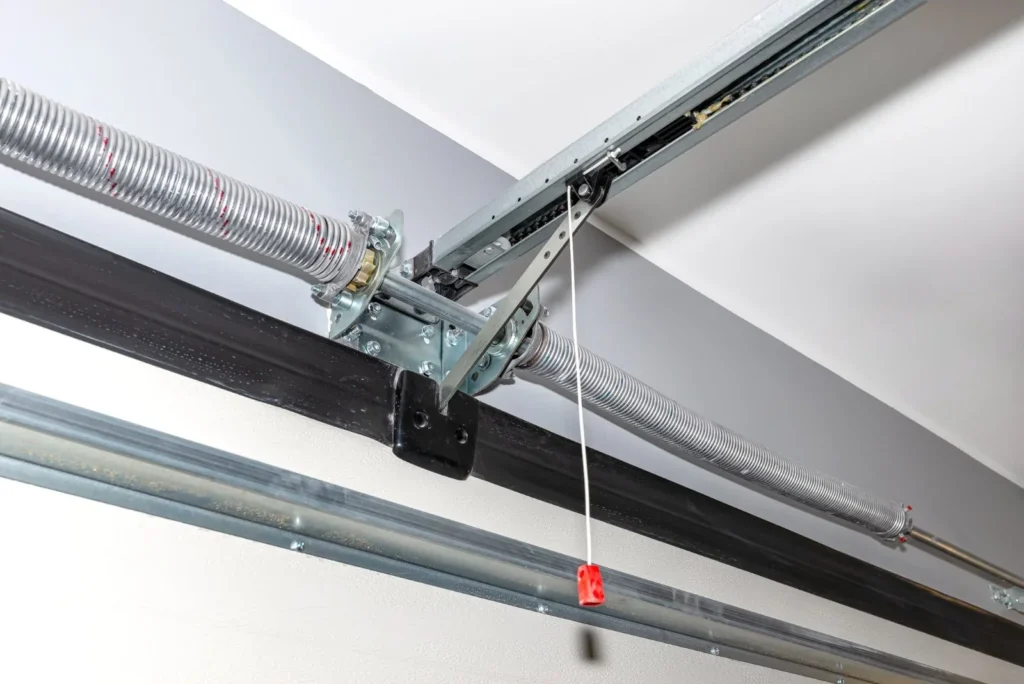
If your garage door spring broke, the safest move is to stop using the door right now. A broken spring means the door has lost the counterweight that makes it safe to lift, so it is either too heavy to move by hand or it could drop without warning. Do not press the wall button or remote, and do not try to force the door open, because running the opener against a broken spring can bend the tracks, snap a cable, or burn out the motor. Leave the door in whatever position it is in, keep people and cars clear, and call One Stop Garage Doors & Gates at (650) 910-6090 for same-day help. Spring replacement is a job for a trained technician, not a DIY fix.
Below is how to confirm the spring actually broke, how to tell a torsion spring from an extension spring, what to do in the meantime, and what a professional replacement typically costs across the Bay Area.
How to Tell If Your Garage Door Spring Broke
A broken spring usually announces itself. Most people hear a loud bang, almost like a gunshot or a metal pipe hitting concrete, often when the door is closing or sitting still overnight. After that, the door stops working the way it should. Here are the most common signs to look for.
| Sign | What It Usually Means |
|---|---|
| A loud bang from the garage | The spring snapped under tension, often when no one was near. |
| A gap of about 2 inches in the torsion spring | The coil has separated into two pieces on the shaft above the door. |
| The door will not lift, or feels extremely heavy | Without a working spring, you are lifting the door’s full weight by hand. |
| The opener strains, hums, or lifts a few inches then stops | The motor cannot overcome the door weight the spring used to carry. |
| The door opens crooked or slams shut | One side has lost spring support, so the door is out of balance. |
| A loose or dangling cable | A snapped spring often lets the lift cables go slack or jump off the drum. |
The clearest check is to look at the spring itself. With the door closed, look up at the shaft above the opening; a two-inch gap in the torsion coil means it is broken. If you cannot tell what you are looking at, take a photo and call (650) 910-6090 and we will confirm it.
Torsion vs Extension Springs: Which One Broke?
Garage doors use one of two spring systems, and knowing which you have helps us bring the right parts on the first trip.
Torsion springs mount on a horizontal steel shaft above the door opening. They twist to store energy and are the more common choice on newer Bay Area homes and heavier double-car doors. When a torsion spring breaks, you will usually see that telltale two-inch gap in the coil.
Extension springs run along the tracks on each side of the door and stretch to store energy. They are common on older single-car doors around Santa Clara and Sunnyvale. When one breaks, it often hangs loose or one side of the door sags. Either type stays under heavy tension even when the door is closed, so both call for the same hands-off approach until a pro arrives.
What to Do Right Now
Once you suspect a broken spring, a few simple steps keep everyone safe and prevent extra damage while you wait for service.
- Stop using the door. Do not press the remote or wall button again. Every attempt to force it can bend tracks, break cables, or overheat the motor.
- Leave the door where it is. If it is down, keep it down. Do not park under a partly open door or prop it up with objects.
- Disconnect the opener only if the door is fully closed. Pulling the red emergency release on a raised, unbalanced door can let it crash down. If the door is up, leave the release alone and wait for a technician.
- Keep kids, pets, and cars clear. A door with a broken spring can move suddenly and weighs far more than it looks.
- Do not touch the spring, cables, or bottom brackets. These parts stay under extreme tension and are not safe to adjust by hand.
- Find another way out. If your car is stuck inside, do not try to muscle the door up. Call for same-day service instead.
Why DIY Spring Replacement Is Dangerous
This is the part we never soften. A garage door spring stores hundreds of pounds of force, and that energy does not disappear when the door is closed. Winding or unwinding a torsion spring with the wrong tools, or unhooking a loaded extension spring, can cause the spring or a winding bar to whip loose at high speed. Serious hand, face, and eye injuries happen every year to homeowners who tried to save a service fee.
Spring work also has to be balanced. The wrong wire size, length, or wind direction can make the door slam shut, damage the opener, or fail again within weeks. On a two-spring torsion door we replace both springs at once, because the second is almost always near the end of its life and matching the pair keeps the door balanced. This is a job for a pro with the right winding bars, cones, and cable tools. For fast, safe help, our team handles garage door repair in San Jose and the surrounding cities 24/7.
What Spring Replacement Costs in the Bay Area
Every door is different, so we quote by the spring size, door weight, and whether you want standard or high-cycle parts. As a general guide, these are typical 2026 Bay Area ranges for a professional, parts-and-labor replacement.
- Single spring replacement on a lighter door sits at the lower end of the range.
- A single torsion spring on an average door falls in the mid range.
- A matched pair of torsion springs on a heavier double-car door is at the higher end.
- High-cycle springs add to the part cost but last longer, which many homeowners find worth it.
Because pricing depends on the exact hardware, we do not post flat prices online. These are typical 2026 ranges only; call (650) 910-6090 for an exact quote after we see your door. To learn more about the process, see our garage door spring replacement in San Jose page.
Same-Day Spring Service Across the South Bay
A broken spring can trap your car in the garage or leave your home less secure, so it is not a repair that should wait. We stock common spring sizes on the truck, so in most cases we can replace a broken spring the same day we visit. We are open 24/7 and serve San Jose, Santa Clara, Sunnyvale, Cupertino, Campbell, Los Gatos, Milpitas, Mountain View, and the wider South Bay and Peninsula.
When you call, it helps to tell us whether you have torsion or extension springs and whether it is a single or double-car door. That lets us load the right parts and finish faster once we arrive.
How to Prevent the Next Broken Spring
Springs wear out mainly from use, and they are rated in cycles. One cycle is a single open plus close. A standard spring is rated for roughly 10,000 cycles, about 7 to 12 years for an average household. Homes that use the garage as the main entrance wear springs out sooner.
You cannot make a spring last forever, but you can get the most out of it. Ask about high-cycle springs rated for 20,000 cycles or more if your family runs the door many times a day, replace both springs together so they age evenly, and schedule a yearly tune-up so we can check wear and balance the door before a coil snaps.
A broken spring is under extreme tension; the U.S. Consumer Product Safety Commission warns against DIY spring repairs.
Frequently Asked Questions
How do I know if my garage door spring is broken?
Most people hear a loud bang, then the door will not open or feels extremely heavy. Look at the torsion spring on the shaft above the door; a gap of about two inches in the coil means it snapped. If you cannot tell, take a photo and call (650) 910-6090 and we will confirm it.
Can I still open my garage door with a broken spring?
You should not. Without the spring, you are lifting the door’s full weight, often 150 to 350 pounds, and it can drop suddenly. Running the opener against a broken spring can also bend the tracks or burn out the motor. Leave the door where it is and call (650) 910-6090.
Is it safe to replace a garage door spring myself?
No. Garage door springs hold hundreds of pounds of tension even when the door is closed, and a mistake can send a spring or winding bar flying and cause serious injury. Spring replacement should always be done by a trained technician with the correct tools. Call (650) 910-6090 and we will handle it safely.
How much does it cost to replace a broken garage door spring?
Cost depends on the spring size, door weight, and whether you choose standard or high-cycle parts. A single spring sits at the lower end of the range and a matched pair of torsion springs at the higher end. These are typical 2026 Bay Area ranges only; call (650) 910-6090 for an exact quote.
Should I replace one spring or both?
On a two-spring torsion door we recommend replacing both at once. The second spring has taken the same wear and is usually close to failing too, and matching the pair keeps the door balanced. Replacing just one often means another service call within months.
How long does a garage door spring last?
Most standard springs are rated for about 10,000 cycles, which is roughly 7 to 12 years for an average household. Homes that use the garage as the main entrance wear springs out faster. High-cycle springs rated for 20,000 cycles or more can last about twice as long.
Broken Spring? Call One Stop Today
A broken garage door spring is unsafe to operate, but it is a routine, same-day fix for our team. Call One Stop Garage Doors & Gates at (650) 910-6090 or request service online and we will replace your spring safely and get the door running smoothly again. We are family-owned, licensed (CSLB #1143915), bonded and insured, and available 24/7 across San Jose, Santa Clara, Sunnyvale, Cupertino, Campbell, Los Gatos, Milpitas, Mountain View, and the wider South Bay and Peninsula.
Need a Garage Door or Gate Fixed Today?
One Stop Garage Doors & Gates offers same-day service across San Jose, Santa Clara & the South Bay — licensed, upfront pricing, no surprise fees.
Call (650) 910-6090Schedule Online