 License: 1143915
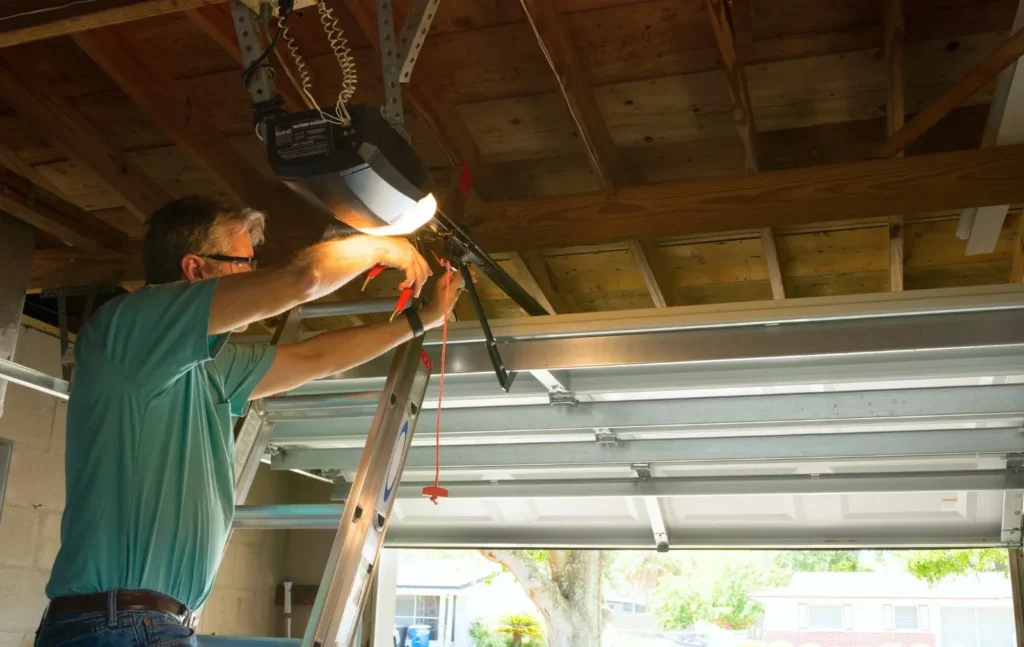
For most Bay Area homes, a belt drive garage door opener is the quieter choice and the best pick for an attached garage or any room above the garage, while a chain drive is cheaper, tough, and perfectly fine for a detached garage. Belt drives run on a reinforced rubber belt, so they lift the door with far less rattle and vibration. Chain drives use a metal chain that costs less up front and holds up well over many years. If you are unsure which fits your home, call One Stop Garage Doors & Gates at (650) 910-6090 and we will help you decide.
Both drives do the same core job: they open and close your door safely and reliably. The right answer depends on where your garage sits, how much noise you can live with, and your budget. Below we break down how each drive works, what it costs in 2026, and how to match one to your situation.
How Each Garage Door Opener Drive Works
There are four common opener types, and each moves the door a little differently. Knowing the basics helps you weigh noise, price, and upkeep before you buy.
Chain drive openers use a metal chain, similar to a bicycle chain, to push a trolley that pulls the door up and down. They are the oldest and most common design. The metal-on-metal motion makes them strong and inexpensive, but also the loudest option.
Belt drive openers replace that chain with a reinforced rubber or fiberglass belt. The belt does the same lifting work with much less noise and vibration. Fewer metal parts grind together, so the ride is smooth and quiet.
Screw drive openers turn a long threaded steel rod to move the trolley. They have fewer moving parts than a chain and open at a steady speed, sitting in the middle for noise. They can be sensitive to big temperature swings, though Bay Area weather is mild enough that this rarely matters.
Direct drive and wall-mount jackshaft openers are the newest style. A direct drive uses a motor that travels along a fixed chain inside the rail, with only one moving part, so it runs very quietly. A jackshaft opener mounts on the wall next to the door instead of on the ceiling, freeing up overhead space. Both are a smart fit for garages with high, low, or obstructed ceilings.
Noise: Why Belt Drives Win for Attached Bay Area Garages
Noise is the number one reason homeowners switch drive types. In the South Bay and Peninsula, many homes in San Jose, Santa Clara, Sunnyvale, and Cupertino have attached garages, and plenty have a bedroom, home office, or nursery directly above the garage. Every time a chain drive opens, that clatter and vibration travels straight into the living space.
A belt drive solves this. It is the quietest of the traditional openers and keeps early-morning and late-night trips from waking the whole house. Direct drive and jackshaft units are also very quiet. If your garage is detached or set away from bedrooms, noise matters far less, and a chain drive is a sensible, budget-friendly choice. If your current opener has started grinding, screeching, or shaking, that can also signal worn parts rather than the drive type itself, and a quick garage door opener repair in San Jose may quiet things down without a full replacement.
Chain vs Belt vs Screw: Side-by-Side Comparison
Here is how the main drive types stack up. The price figures are typical 2026 installed ranges for the Bay Area; call (650) 910-6090 for an exact quote on your door.
| Feature | Chain Drive | Belt Drive | Screw / Direct Drive |
|---|---|---|---|
| Noise | Loudest | Quietest | Moderate (direct drive is very quiet) |
| Price range (installed) | ~$250–$450 | ~$350–$600 | ~$450–$800 |
| Maintenance | Periodic lubrication and chain tension checks | Low; occasional belt inspection | Low; screw drive needs occasional lubrication |
| Durability | Very durable, proven design | Durable with fewer wear points | Durable; direct drive has one moving part |
| Best for | Detached garages, tight budgets | Attached garages, rooms above the garage | High or obstructed ceilings, quiet operation |
These ranges cover the opener unit and standard installation. Heavier doors, extra remotes, keypads, or added smart accessories can move the final price up. We always confirm the number before any work starts.
Price, Maintenance, and Lifespan
Chain drives are the least expensive to buy and install, which is why they remain popular. Belt drives cost a bit more for the quieter ride, and direct or jackshaft units sit at the top of the range. These are all typical 2026 ranges, so the only way to get an exact figure is to look at your specific door.
On upkeep, chain drives ask for the most attention, with periodic lubrication and a check on chain tension. Belt and direct drives have fewer parts rubbing together, so they need less care. A well-maintained opener of any drive type usually lasts about 10 to 15 years, and keeping the parts clean and the springs balanced does more for longevity than the drive type alone.
Horsepower and Door Weight
Drive type is only half the decision. Motor strength, measured in horsepower, needs to match the weight and size of your door. Too small a motor strains under a heavy door and wears out early.
- Standard single doors and light double doors: a 1/2 HP motor is usually enough.
- Most double doors and steel doors: a 3/4 HP motor gives a good balance of power and long life.
- Heavy wood, insulated, or oversized doors: step up to 3/4 HP or 1 HP so the opener is not working at its limit.
- Older or unbalanced doors: have the springs checked first, since a poorly balanced door makes any motor work harder than it should.
If you are not sure what your door weighs, we can measure it and recommend the right motor so you are not overpaying or underpowered.
Smart Features and Battery Backup
Two features matter to almost every Bay Area homeowner today, and both are available no matter which drive you pick. Smart connectivity, such as myQ, lets you open, close, and monitor your garage door from your phone and get alerts if it is left open. Chain, belt, screw, and jackshaft openers all come in smart-ready models, so you do not have to choose between a quiet drive and app control.
Battery backup is not optional in California. Since 2019, state law has required new residential garage door openers to include a battery backup so the door still works during a power outage. Every opener we install meets this requirement, which matters during the region’s occasional utility-related outages.
Which Opener Should You Choose?
Here is a quick way to match a drive type to your home:
- Attached garage with a room above it: choose a belt drive or a jackshaft for the quietest operation.
- Detached garage or workshop: a chain drive gives you durability at the lowest price.
- Tight budget: a chain drive delivers the most value up front.
- High, low, or cluttered ceiling: a wall-mount jackshaft opener frees up overhead space.
- You want the smoothest, most modern feel: a direct drive runs quietly with just one moving part.
- Heavy wood or oversized door: pair a belt or chain drive with a 3/4 HP or 1 HP motor.
Still weighing your options? A new opener is a good time to make sure the whole system is safe and balanced. If you are replacing an old unit, our team handles garage door installation in San Jose and can set up the right drive, horsepower, and smart features for your home in one visit.
For opener drive types and standards, check the manufacturer, such as LiftMaster.
Frequently Asked Questions
Is a belt drive garage door opener worth the extra cost?
For an attached garage, especially one with a bedroom or office above it, a belt drive is usually worth it. The quieter operation makes a real difference when the door opens early in the morning or late at night. For a detached garage where noise does not reach living space, a chain drive saves money and works just as well.
How long do chain drive and belt drive openers last?
Both typically last about 10 to 15 years with basic maintenance. Chain drives may need slightly more frequent lubrication and tension checks. Belt drives have fewer parts that wear against each other, so they can run smoothly for years with little attention.
Do I need a battery backup on my garage door opener in California?
Yes. Since 2019, California law requires new residential garage door openers to include a battery backup so the door still works during a power outage. Any opener we install in the Bay Area meets this requirement.
What horsepower opener do I need for my garage door?
A standard single or light double door usually runs well on a 1/2 HP or 3/4 HP motor. Heavy wood or oversized double doors do better with 3/4 HP or 1 HP. We can check the weight and size of your door and recommend the right motor.
Are belt drive openers compatible with smart features like myQ?
Yes. Chain, belt, screw, and jackshaft openers are all available with smart connectivity such as myQ, so you can open, close, and monitor the door from your phone. Smart features depend on the model, not the drive type.
What is a wall-mount or jackshaft opener?
A jackshaft opener mounts on the wall beside the door instead of on the ceiling. It frees up overhead space and runs very quietly. These direct-drive units are a good fit for garages with high, low, or obstructed ceilings.
Get an Honest Recommendation from One Stop Garage Doors & Gates
Not sure whether a chain, belt, or direct drive is right for your garage? Call One Stop Garage Doors & Gates at (650) 910-6090 for a straight answer with no pressure. We are a family-owned, licensed (CSLB #1143915), bonded, and insured company serving San Jose, Santa Clara, Sunnyvale, Cupertino, Campbell, Los Gatos, Milpitas, Mountain View, and the wider South Bay and Peninsula. We are open 24/7, so whether you are replacing a noisy old opener or installing one for the first time, we are ready to help you choose the right drive at a fair price.
Need a Garage Door or Gate Fixed Today?
One Stop Garage Doors & Gates offers same-day service across San Jose, Santa Clara & the South Bay — licensed, upfront pricing, no surprise fees.
Call (650) 910-6090Schedule Online