 License: 1143915
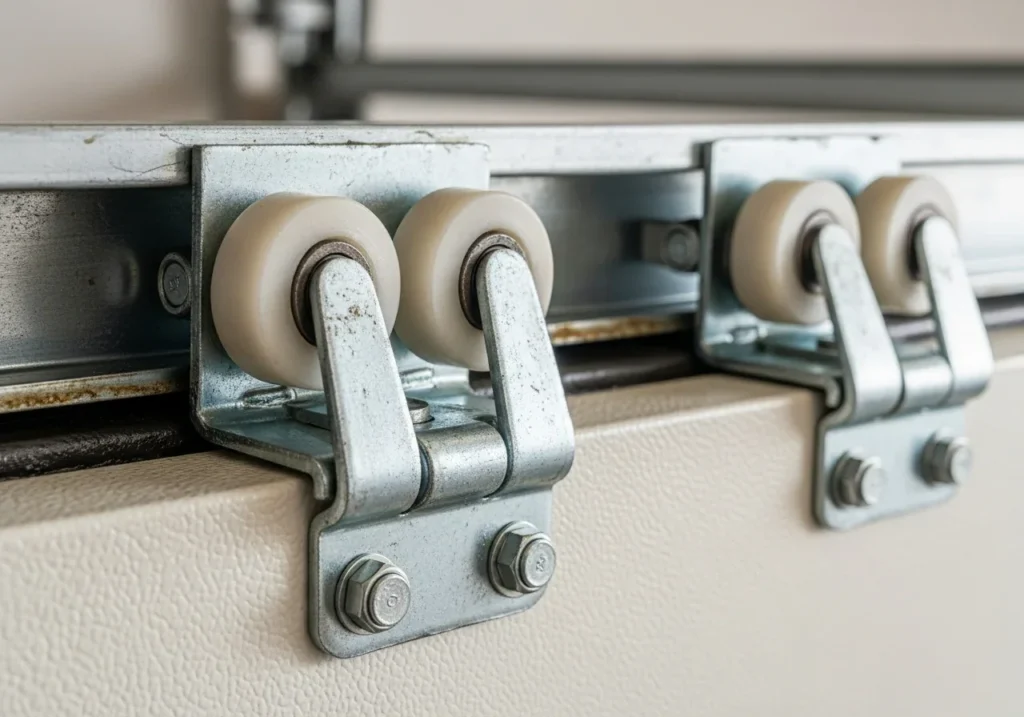
If your garage door has started grinding, shaking, or dragging as it opens, worn rollers are one of the most common causes — and replacing them is usually a straightforward, affordable fix. Garage door rollers are the small wheels that ride inside the tracks and let a heavy door glide up and down smoothly. Most residential rollers last 10 to 15 years, but daily use in the South Bay’s dry heat and temperature swings can wear them out sooner. At One Stop Garage Doors & Gates we replace rollers every week across San Jose, Santa Clara, and Sunnyvale, and we are available 24/7 at (650) 910-6090. Catching the warning signs early keeps a small part from turning into a bent track or a door off its rails.
Below we walk through what rollers do, the five signs that yours need replacing, the difference between nylon and steel, how often to swap them, and roughly what the job costs in 2026.
What Do Garage Door Rollers Do?
Rollers are the wheels that connect your door panels to the vertical and horizontal tracks. Each panel has rollers on both sides, and a typical two-car door has around ten to twelve of them. As the opener lifts and lowers the door, the rollers spin and keep the panels aligned in the track so the whole system moves as one smooth unit.
When rollers are in good shape, the door barely makes a sound. When they wear out, the stems bend, the bearings seize, or the wheels flatten, and the door starts to fight the track instead of gliding through it. That extra friction puts strain on the opener, the springs, and the tracks themselves, which is why a worn roller is worth fixing quickly.
The 5 Signs Your Garage Door Rollers Need Replacing
Rollers rarely fail all at once. They give you plenty of warning if you know what to watch and listen for. Here are the five signs we see most often in Bay Area homes:
- Loud grinding or squealing. A door that screeches, grinds, or rumbles usually has dry, worn bearings or metal wheels scraping the track. Fresh nylon rollers cut most of that noise immediately.
- Jerky or shaky travel. If the door hitches, stutters, or vibrates on the way up instead of moving in one smooth motion, the rollers are catching in the track instead of rolling freely.
- The door coming off track. Rollers that have flattened or lost bearings can pop out of the track and let a panel sag or jam. This is a safety issue and needs attention before you operate the door again.
- Visibly worn, cracked, or flat rollers. Look closely with the door down. Chipped nylon, rust, wobbling stems, or wheels with a flat spot are all clear signals that the rollers are past their life.
- The door moving slowly or binding. When a door drags, hesitates, or feels like it is straining against something, worn rollers are creating friction the opener has to overcome.
If you notice a door slipping out of alignment, it often points to a track problem alongside the rollers. In that case a garage door track repair in San Jose may be needed at the same time so the new rollers have a straight, clean channel to run in.
Nylon vs. Steel Rollers: Which Is Better?
Rollers come in a few materials, and the choice matters more than most homeowners expect. Steel rollers are inexpensive and strong, but they are noisier and need regular lubrication. Nylon rollers run quieter and smoother, which makes them a favorite for the attached garages common across Santa Clara and Sunnyvale, where the door shares a wall with a bedroom or living space.
Here is how the common options compare:
| Roller Type | Material | Noise Level | Typical Lifespan | Price Range (per roller, parts) |
|---|---|---|---|---|
| Standard steel | Steel wheel and stem | Loud | 3 to 5 years | $1 to $5 |
| Basic nylon | Nylon wheel, no bearings | Moderate | 5 to 8 years | $3 to $8 |
| Nylon with sealed bearings | Nylon wheel, steel bearings | Very quiet | 10 to 15 years | $8 to $18 |
For most Bay Area homeowners, nylon rollers with sealed bearings are the best value. They cost a little more up front but last far longer, run almost silently, and do not need constant oiling. If a quiet garage matters to you, this is the upgrade we recommend most often.
How Often Should You Replace Garage Door Rollers?
As a general rule, plan to replace rollers every 10 to 15 years if you have quality nylon-bearing rollers, or every 3 to 5 years for basic steel ones. Cycles matter more than the calendar, though. A door you open and close six or eight times a day will wear its rollers faster than one used twice a day.
It is also smart to replace all the rollers at once rather than one at a time. They wear at a similar rate, so swapping a full set keeps the door balanced and saves you repeat service calls. When a technician is already on site, doing the whole set adds little labor and gives you years of quiet, reliable operation.
DIY vs. Professional Roller Replacement
Replacing the center rollers on a door is within reach for a handy homeowner. You lift the door partway, flex the track, and slide each roller stem out and the new one in. The middle-of-the-door rollers carry no spring tension, so they are relatively safe to change.
The rollers at the very bottom of the door are a different story. Those bottom brackets are attached to the lift cables, which are under high tension from the springs. Removing that bracket without releasing the tension safely can send the cable or the bracket flying, which causes serious injuries every year. Those end rollers, and anything involving the cables or springs, should be left to a pro. If you are unsure where the risk starts, a garage door repair in San Jose visit sorts it out fast and safely, and we can replace every roller in one trip.
Garage Door Roller Replacement Cost in 2026
Roller replacement is one of the more budget-friendly garage door repairs. In 2026, a typical full-set roller replacement in the South Bay runs in the $120 to $250 range, including parts and labor, depending on the door size, the roller grade you choose, and whether any track adjustment is needed. Premium quiet nylon rollers sit toward the higher end, while a basic swap lands lower.
These are typical 2026 ranges, not a fixed quote. Every door is a little different, so call (650) 910-6090 for an exact quote for your home. We serve San Jose, Santa Clara, Sunnyvale, Cupertino, Campbell, Los Gatos, Milpitas, Mountain View, and the wider South Bay and Peninsula, and we will tell you honestly whether rollers alone will fix the problem or whether the tracks or springs also need attention.
For hardware standards behind rollers and tracks, see the Door & Access Systems Manufacturers Association (DASMA).
Frequently Asked Questions
How much does garage door roller replacement cost in the Bay Area?
A full-set roller replacement typically runs between $120 and $250 in 2026, including parts and labor, depending on door size and roller grade. These are typical ranges, not a fixed price, so call (650) 910-6090 for an exact quote.
How long do garage door rollers last?
Quality nylon rollers with sealed bearings usually last 10 to 15 years, while basic steel rollers often need replacing every 3 to 5 years. How often you use the door matters more than age, since more daily cycles mean faster wear.
Are nylon rollers better than steel rollers?
For most homes, yes. Nylon rollers run much quieter, glide more smoothly, and do not need regular lubrication like steel does. That makes them a great choice for the attached garages common in Santa Clara and Sunnyvale.
Can I replace garage door rollers myself?
You can usually swap the center rollers safely because they carry no spring tension. The bottom rollers are attached to the lift cables under high tension, so those should be left to a professional to avoid serious injury.
How long does a roller replacement take?
A standard full-set roller replacement takes a trained technician about 30 to 60 minutes for most residential doors. If the tracks need adjusting or straightening at the same time, it can take a little longer.
What happens if I ignore worn rollers?
Worn rollers create friction that strains the opener, springs, and tracks, and they can eventually let the door jump off its track. Replacing them early is a small, affordable fix that prevents a larger and more expensive repair later.
Get Your Garage Door Rollers Replaced Today
If your door is grinding, shaking, or dragging, do not wait for it to jump the track. Call One Stop Garage Doors & Gates at (650) 910-6090 or request service online, and we will get your door rolling quietly again. We are family-owned, licensed CSLB #1143915, bonded and insured, and available 24/7 across San Jose and the wider South Bay.
Need a Garage Door or Gate Fixed Today?
One Stop Garage Doors & Gates offers same-day service across San Jose, Santa Clara & the South Bay — licensed, upfront pricing, no surprise fees.
Call (650) 910-6090Schedule Online